“I would wake up in panics, to the point I was scared of going to sleep”
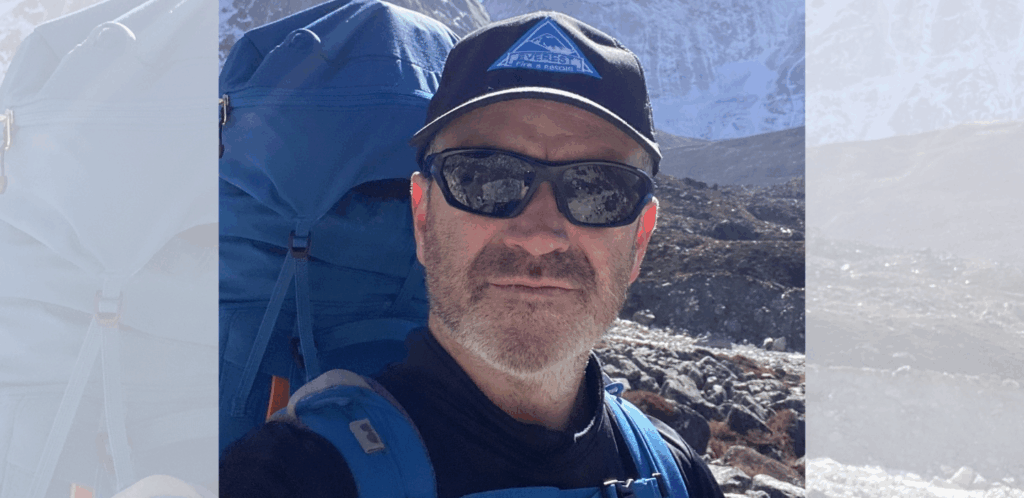
John Aitchison has always lived life in the fast lane. When he’s not working in his role as an Urban Search and Rescue Instructor with Scottish FRS, he’s a Crew Lead with the UK’s International Search and Rescue team or volunteering his time for Fire Aid in Nepal.
And amongst all that, he’s spending as much time as he can with his family.
While his varied roles bring him immense joy, they’ve also previously impacted his mental health… and he didn’t notice the full extent until years later.
John has since received our support at Jubilee House, our centre in Cumbria – in a programme similar to our Reset Programme, which we now offer at Harcombe House – and hopes by sharing his experience, he’ll inspire others to reach out for support sooner than he did.
“My dad was a firefighter and my grandfather was a volunteer firefighter in his village,” says John. “I followed in their footsteps and I’ve got loads of different hats now; my main job is an Urban Search and Rescue Instructor in Technical Rescue in Scotland.
“I’m also a Crew Lead for United Kingdom International, Search and Rescue (ISAR), and I do a bit of first responding with the Scottish Ambulance Service. I also project manage for Fire Aid International Development, specifically on the Nepal project.”
His passion for the work in Nepal was sparked in 2015, when he was deployed there with ISAR following the devastating earthquake. For John, it came following a challenging time in his life – and he says it triggered a decline in his mental health in the months that followed.

Source: The Emergency Services Show 2025/Duncan Soar
“It was a bit of a catalyst of different things that had happened in my life and that seemed to tip me over the edge a little bit,” he says.
“I’d lost my father not that long beforehand. Then there were a few things in the fire service that had culminated. You see everything; RTCs, fires, suicides, and a lot of stuff had been playing on my mind, but I struggled through. And then Nepal happened.
“It was a slow kind of breakdown over the next couple of years that led to, in 2017, me booking sick from work. I didn’t know what was wrong with me at first, I actually thought I’d contracted some disease, I was fatigued, I found it very hard to do anything or concentrate, I had short term memory loss, mood swings, it was wild.”
Looking back now, John says while he worked on-call, he’d often make the mistake of going to a difficult shout, then going straight to bed when he got home without processing what he’d seen. He’d then revisit some of the harrowing scenes in his sleep.
“I would wake up in panics, to the point where I was scared of going to sleep because as soon as I shut my eyes I would just be thinking about horrible things,” he adds. “I’d be running things back in my head thinking, ‘I should have done that better’.”
While John hadn’t recognised what he was going through initially as mental health decline, he eventually reached out to a GP and was diagnosed with complex PTSD and morbid depression.
He went on to receive support through his wellbeing department at work, which referred him to a centre for mental health trauma in Edinburgh. Around the same time, he also got in touch with us and was offered a stay at Jubilee House.
“I felt a bit of a fraud going down at first,” John says. “The place was full of folk with injuries that you could see. I went into the physio on the first day and said, ‘I don’t know why I’m meant to see you’, but he reassured me that physical and mental health are connected.
“It all tied in nicely and I got some sleep that week for the first time in a long time.
“It did a reset for my recovery, which I’m very, very grateful for”
John Aitchison
“The wellbeing talks included some relaxation work and it was almost like a reset. It was away from home and it was just purely me on that recovery path, working on my fitness, working on my sleep, working on the whole health and wellbeing approach.
“I wasn’t cured by them, that doesn’t happen instantly, but it definitely did a reset for my recovery, which I’m very, very grateful for.”
John says his top advice to anyone going through a difficult time is to “listen to other people” and try to acknowledge that you need help.
“I had people tell me for years ‘you need some help, you’re not quite right, you’re not yourself’. And while I knew deep down that I needed that help, it took me several years,” he says.
“Fire Fighters Charity’s online resources are fantastic. My support was more face-to-face, but I have since seen the online resources that are available.
“There’s a lot of stuff I still use, while taking enjoyment out of life, which is really important. It’s not all about work all the time. I do work a lot, but there’s getting enjoyment out of the simple things, taking the kids out, going to a gig, having a meal with your wife, that kind of thing.
“My advice to anyone reading this would be: go onto Fire Fighters Charity’s website and have a have a look. Then just make the phone call.”
If you feel you’d benefit from our health and wellbeing support, you can call our Support Line on 0800 389 8820, make an enquiry online or click below: