

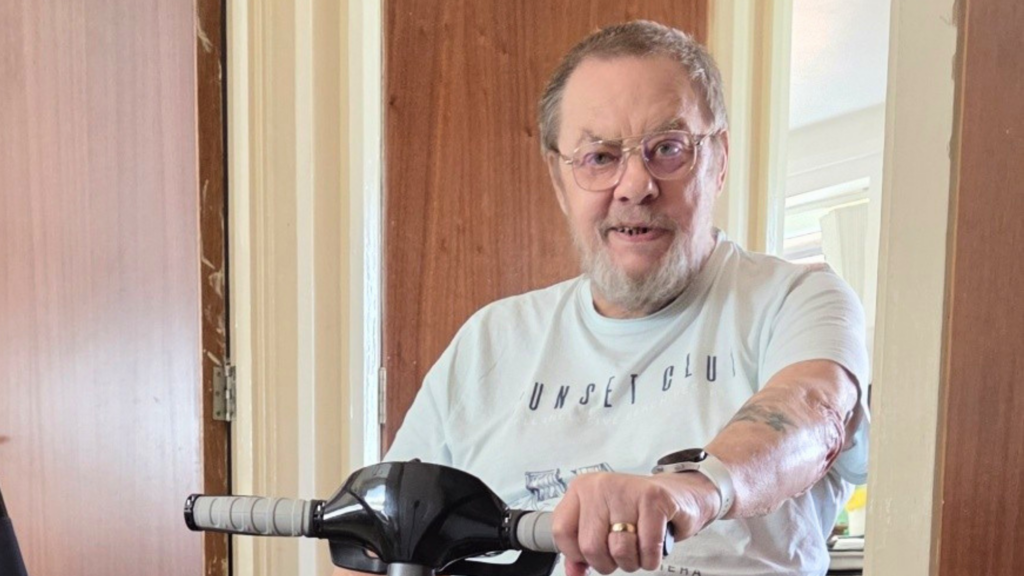
Terry: “You helped me access a scooter after an amputation – thanks to you I’ve got my freedom back”
Facing the loss of a limb would be overwhelming for most people. But when Terry was told his leg would need to be amputated, he made a decision that has shaped every stage of his life since: to stay positive.
Today, more than a year on from the operation, that incredible attitude continues.
“It hasn’t bothered me as much as people expected,” says Terry, who’s a retired London Fire Brigade firefighter. “I just think, ‘it’s a leg!’
“I was actually in hospital before they did it and I met a man there who’d had his foot amputated. He was laughing and joking and I thought, ‘that’s the right attitude’ and I’ve tried to stick to that ever since.”
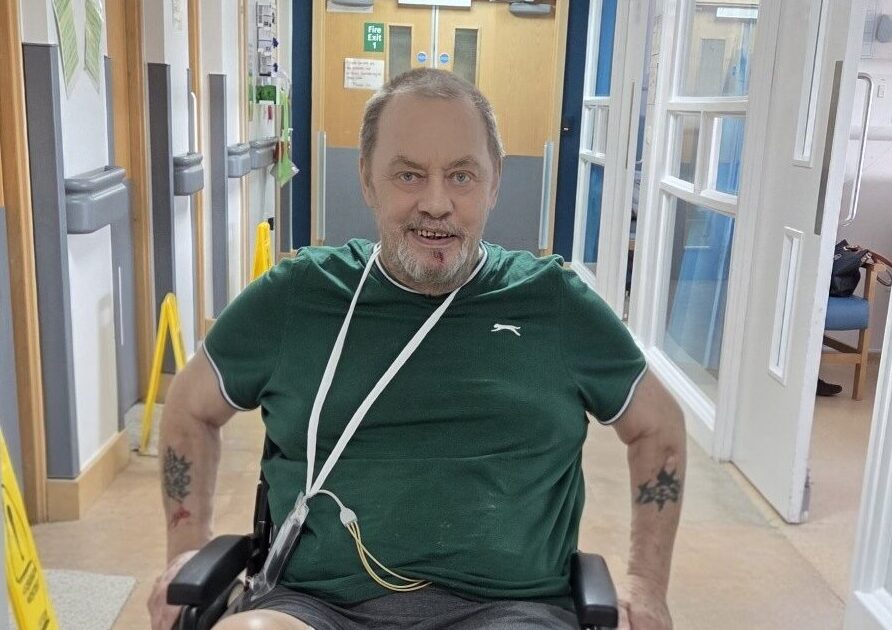
The amputation came after a series of serious medical complications.
“During one of the operations my heart stopped and I needed a complete blood transfusion. It was a difficult process,” he says.
“I’ve never known pain like it. I’m pretty good at handling pain, I just usually shrug it off and don’t bother with painkillers, but it was really bad. I’m diabetic as well, and that plays into it.”
After several further procedures, doctors told Terry that amputation was the only option. While the news might have devastated many, Terry focused on what he would gain.
“The great thing for me is the pain I’d suffered beforehand is gone now. The leg has disappeared, but I’d been in agony before and to not have that anymore is a big bonus,” he adds.
“What has been difficult since is not being mobile and being housebound.”
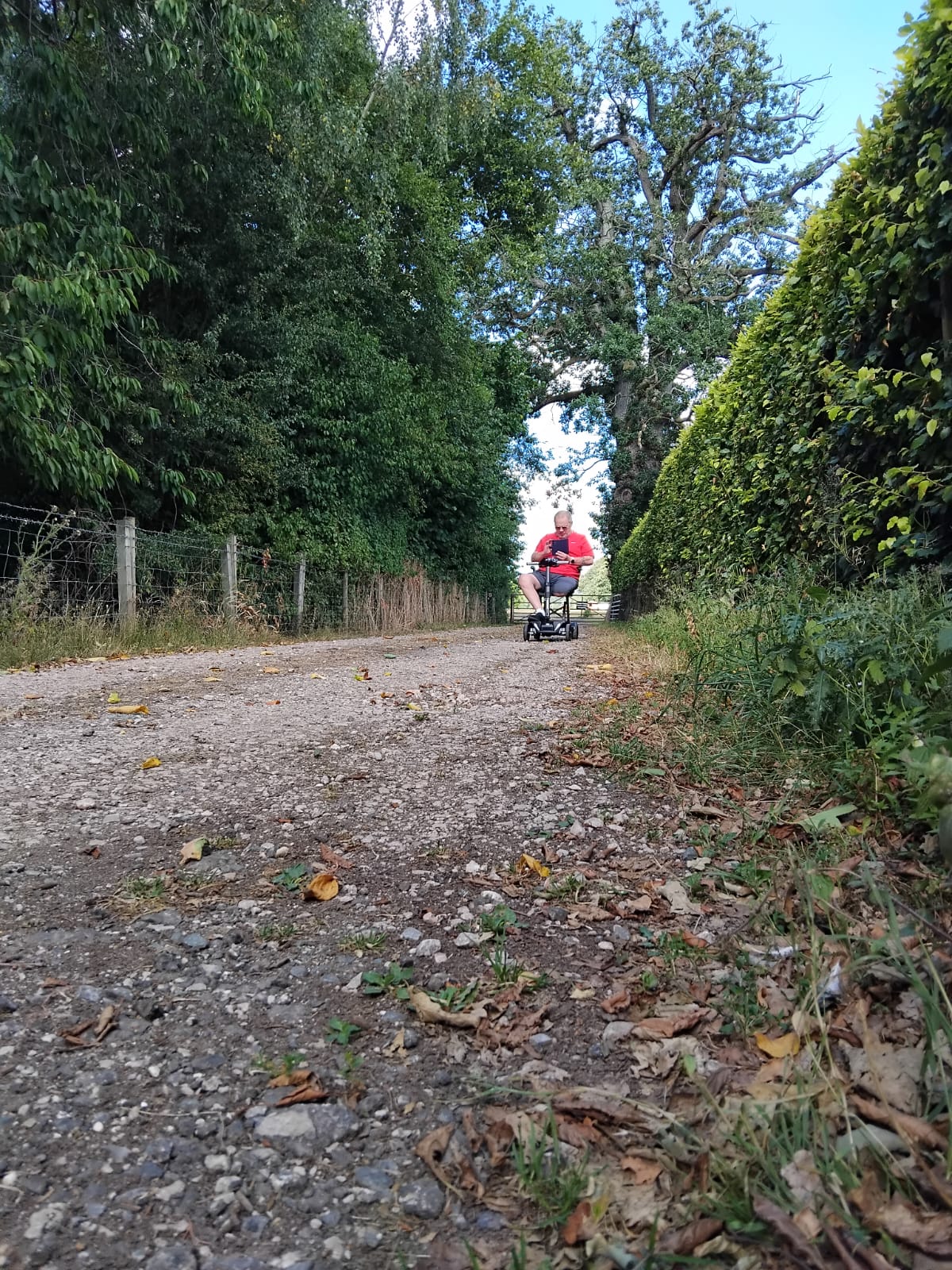
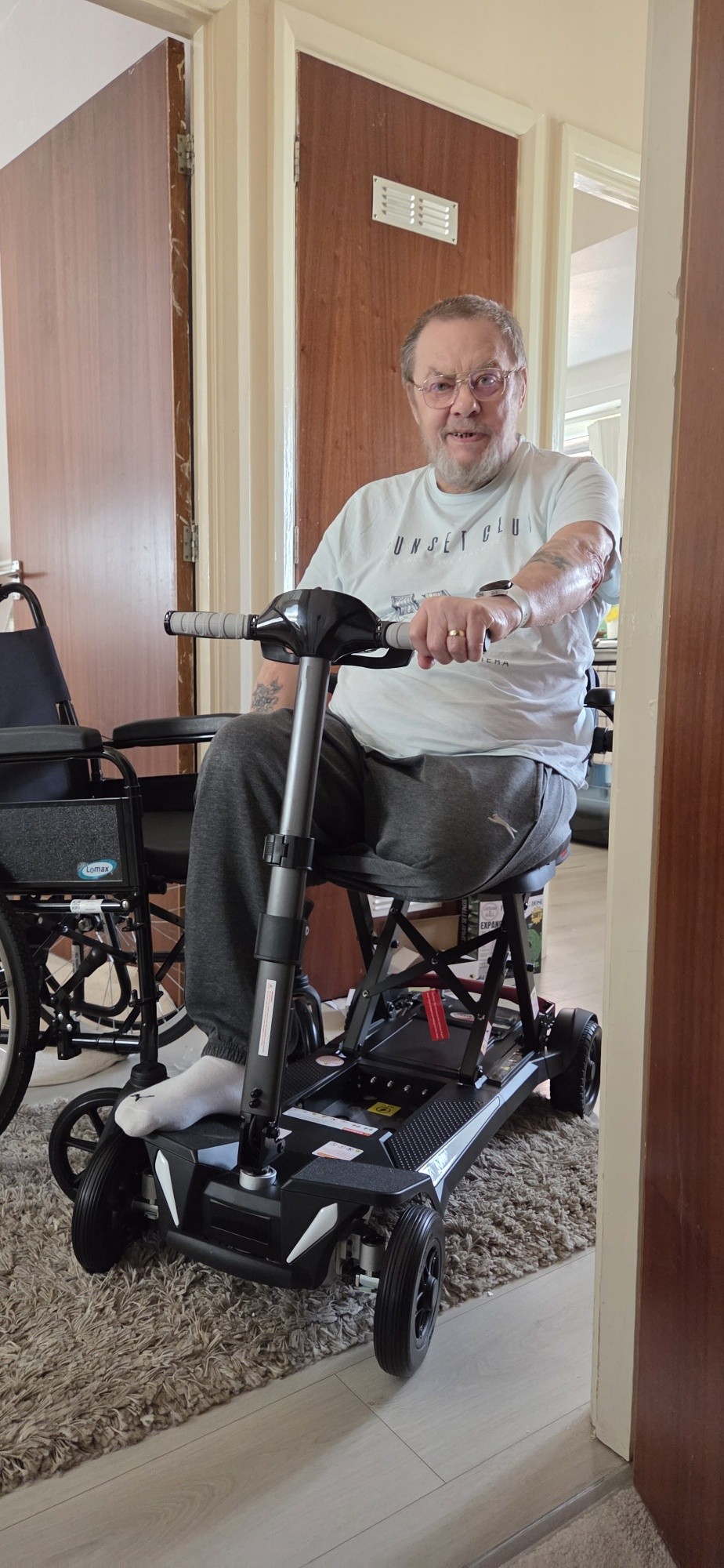
Unable to travel any real distance in a wheelchair and needing something that could fit into a car, Terry found himself feeling increasingly isolated. That’s when he turned to our Welfare team for support.
A few months ago, we helped fund a fold-up mobility scooter, offering him back some independence.
“I couldn’t believe it,” says Terry. “It was so quick. It was really, really helpful, and it’s given me so much independence back. I spent months housebound, unsure when I’d be able to get out and about again. Now, I’ve got that freedom again.”
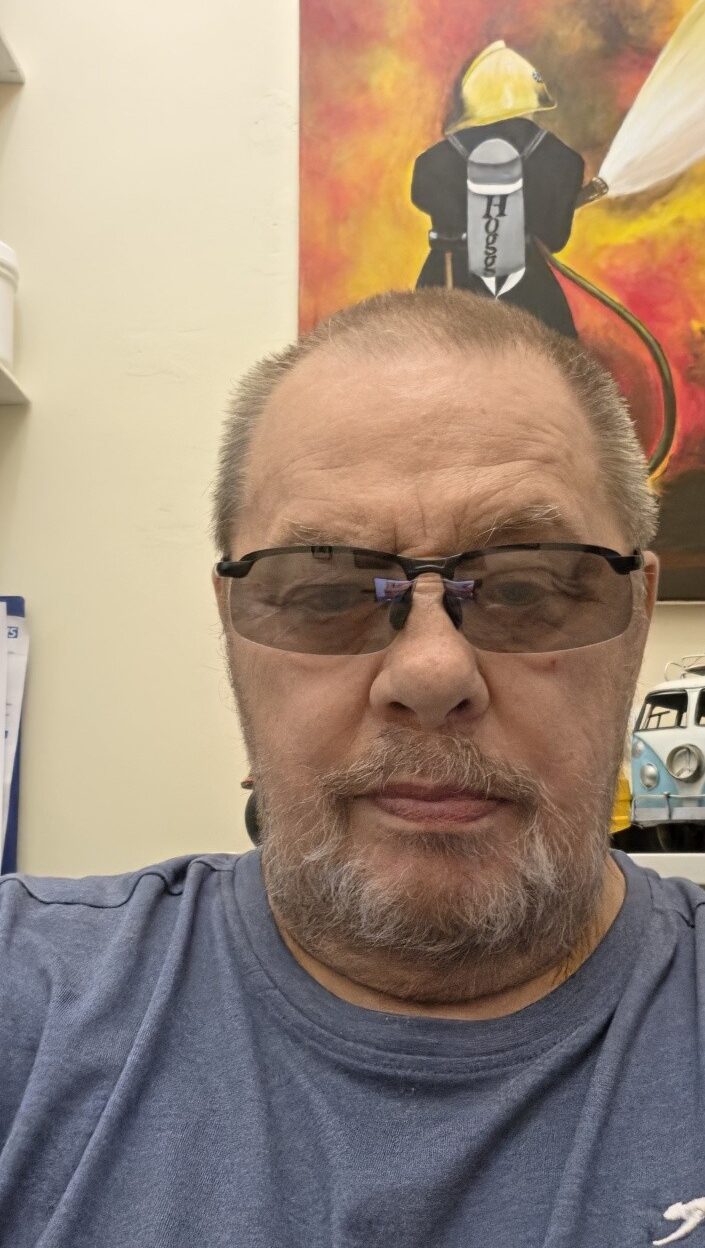
It’s not the first time Terry has had support from us. Before medically retiring, he spent 10 years serving as a firefighter with LFB. Throughout his career, he was also a huge supporter of Fire Fighters Charity.
“I used to organise fundraisers for the charity, including discos at the station,” he says. “Then my wife actually ran a half marathon after I retired too.”
Retirement didn’t come easily at first, however: “I got into a mess to be honest. I was drinking every day and racking up a credit card bill – I couldn’t see a way through it,” Terry says.
“I spoke to the charity and that helped immediately, just getting in touch. They put me in touch with Citizen’s Advice and I had help in clearing the debt – it was so helpful.”
Looking back, Terry now recognises how closely that difficult period was linked to his mental health: “I hadn’t wanted to leave the fire service when I did, but I had to at the time because of my diabetes. I knew I couldn’t keep working, but I really missed it.
“I know now that it’ll never get to that point again. I avoid any kind of debt and like to keep positive as much as possible.”
That same mindset is what has helped him through the last year – and one he hopes to spark in others reading his story.
If you feel you’d benefit from our health and wellbeing support, you can call our Support Line on 0800 389 8820, make an enquiry online or click below: